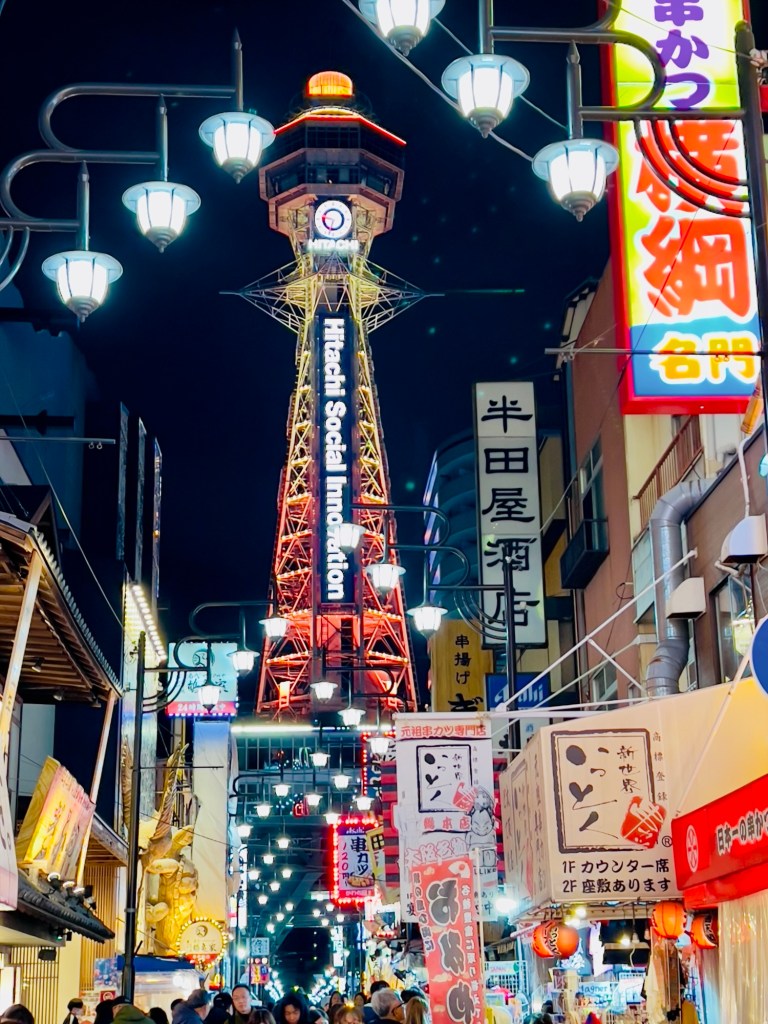
A Walk Through Shinsekai
On a crisp, beautiful evening, I found myself ready to dive deeper into Osaka’s heartbeat. I’d been to the famous Dotonbori before, with its flashy lights and bustling energy, but this time, I craved something different, something that would give me a closer, more intimate feel of the city. That’s when I decided to visit Shinsekai for the first time. Now, Shinsekai isn’t on every tourist’s radar, and that’s exactly what made it so appealing. The thought of exploring a place with fewer crowds, where I could truly feel the local vibe, was exactly what I was looking for. Plus, I wasn’t keen on waiting in long lines for food. I wanted to experience Osaka’s flavors without the hassle.
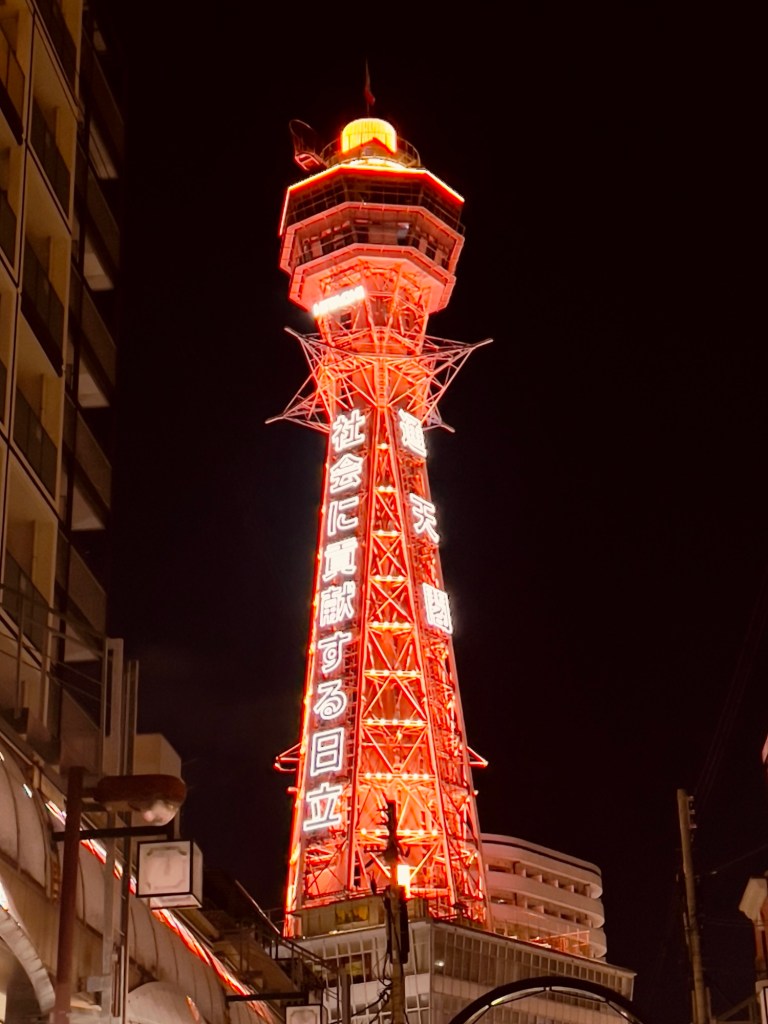
For those unfamiliar with Shinsekai, let me paint you a picture. “Shinsekai” means “New World,” and it’s a district that radiates nostalgia. Established in the early 1900s, it carries with it a vintage charm yet still hums with modern-day energy. The iconic Tsutenkaku Tower stands proudly at the heart of the area, offering sweeping views of the city. As you wander through the streets, you’re greeted by neon signs, retro shops, and the aroma of sizzling street food, most notably kushikatsu, those irresistible deep-fried skewers. The whole place feels like a bridge between Osaka’s past and present, a living snapshot of the city’s rich history.
When I stepped out of Ebisucho Station, there it was, the towering presence of Tsutenkaku Tower. I could already feel the excitement bubbling up inside me. My eyes were drawn to the rows of charming, quirky shops lining the streets, each one seemingly telling its own story. It was around 7 p.m., and although some of the shops had already closed for the night, I was determined to soak in as much of this place as I could. The streets, bathed in neon lights, felt a world away from the more tourist-heavy areas I had visited before. This was Osaka in its truest, rawest form.
But there was one thing I was especially excited about: food. I had heard so much about the delicious offerings in Shinsekai, and now I was ready to dive in. The hardest part? Deciding where to eat. Everywhere I looked, there were tempting options. After wandering for a while, I finally stumbled upon a place that seemed just right. The menu was packed with mouthwatering dishes, and I found myself debating for way longer than I thought I would. In the end, though, there was one thing I had to try: the locals’ favorite, kushikatsu. How could I not? But I wasn’t stopping there. I was a little hungry, so I also added some karaage(fried chicken) and yaki meshi (fried rice) to my order.
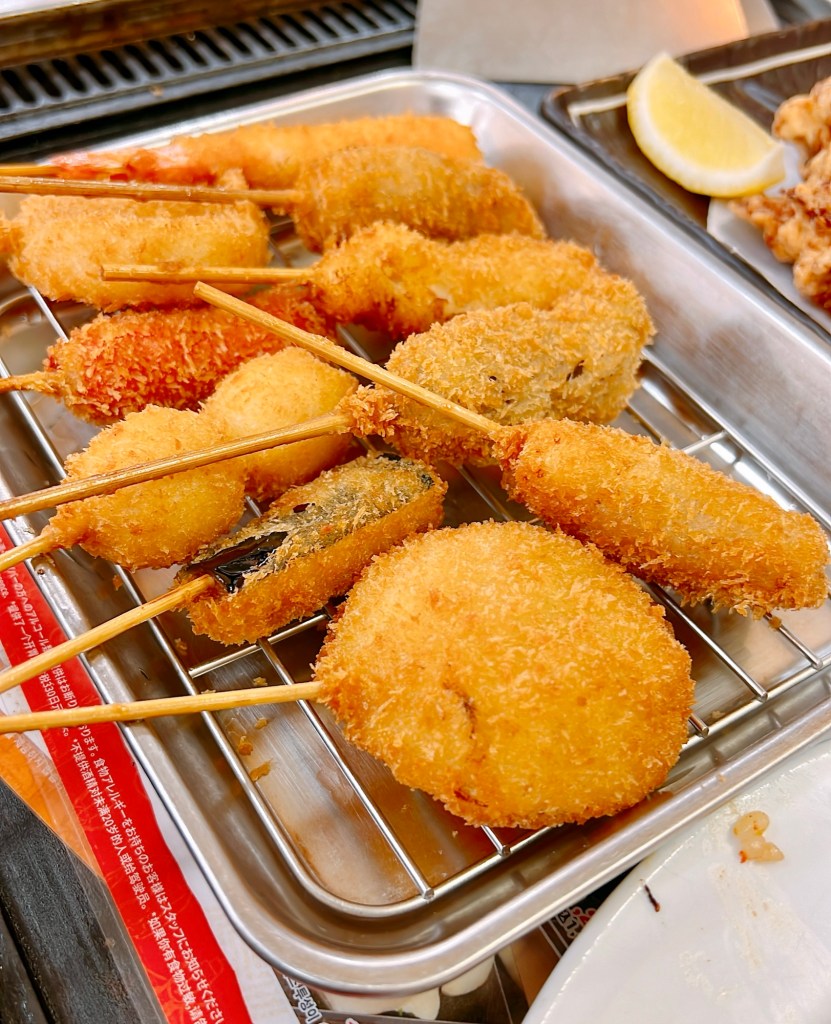

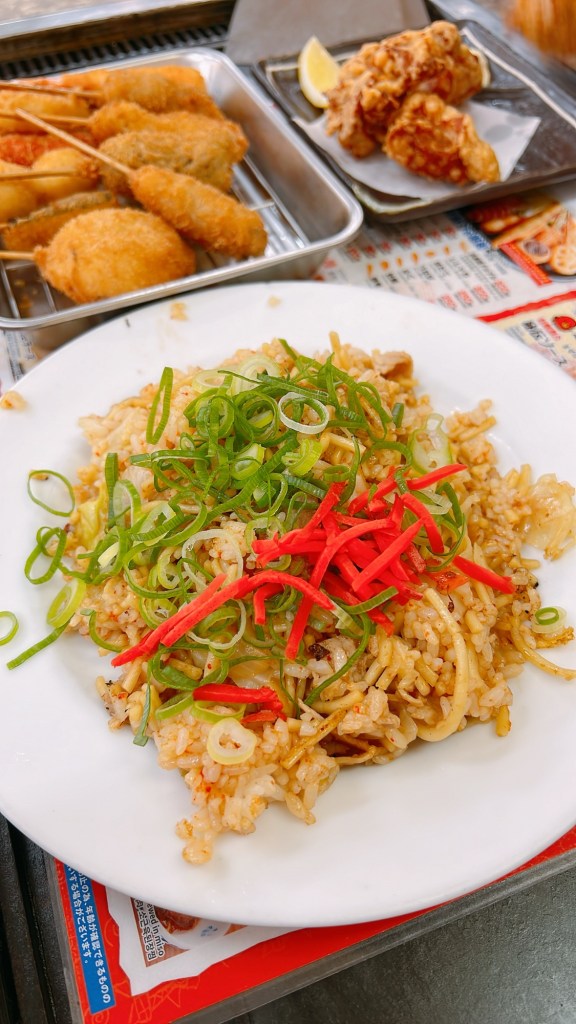
When that plate of crispy, golden kushikatsu arrived, I couldn’t wait to dig in. Each bite was perfection: light, crispy, and bursting with flavor. It wasn’t just food; it was a moment of pure joy. The karaage was just as amazing, perfectly seasoned and tender inside, with that irresistible crunch on the outside. And the yaki meshi? A simple dish, but the combination of flavors was just the right way to balance everything out. I savored every bite, each mouthful better than the last. I was in food heaven.
After eating to my heart’s content, I decided to wander around and let the evening unfold at its own pace. The cold winter air kissed my face as I strolled through the streets of Shinsekai. Everything around me seemed to glow with a warm, inviting energy, the colorful lights reflecting off the buildings, casting playful shadows on the sidewalks. It was such a contrast to the colder, quieter night air, and I couldn’t help but feel a sense of calm wash over me.
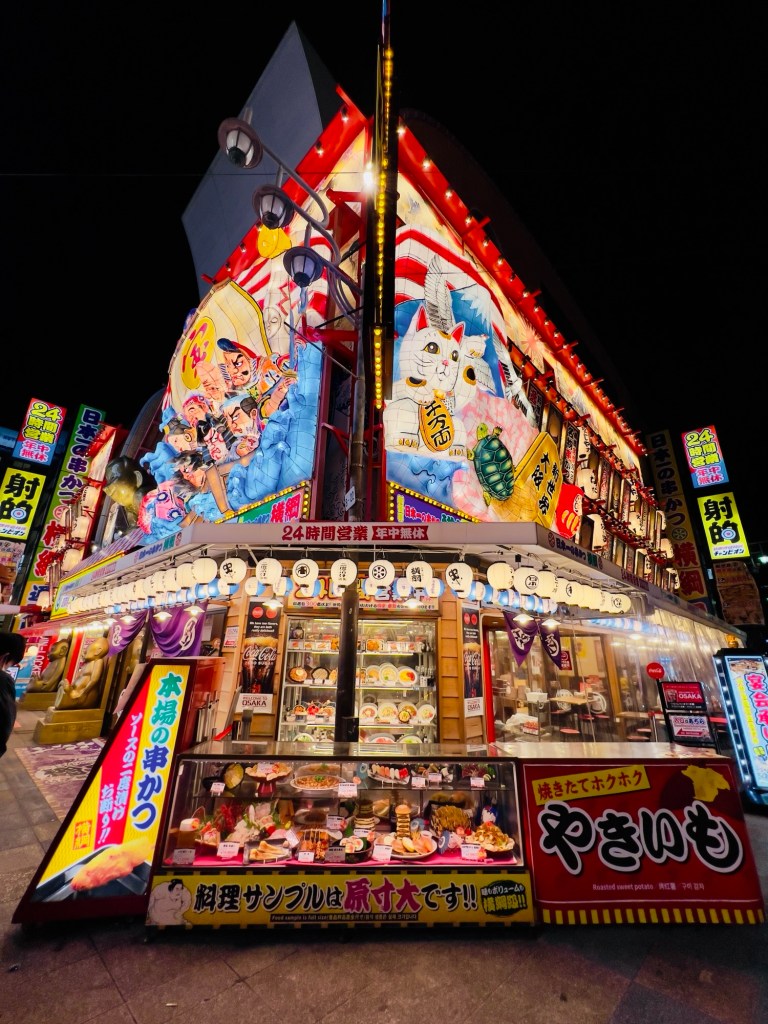
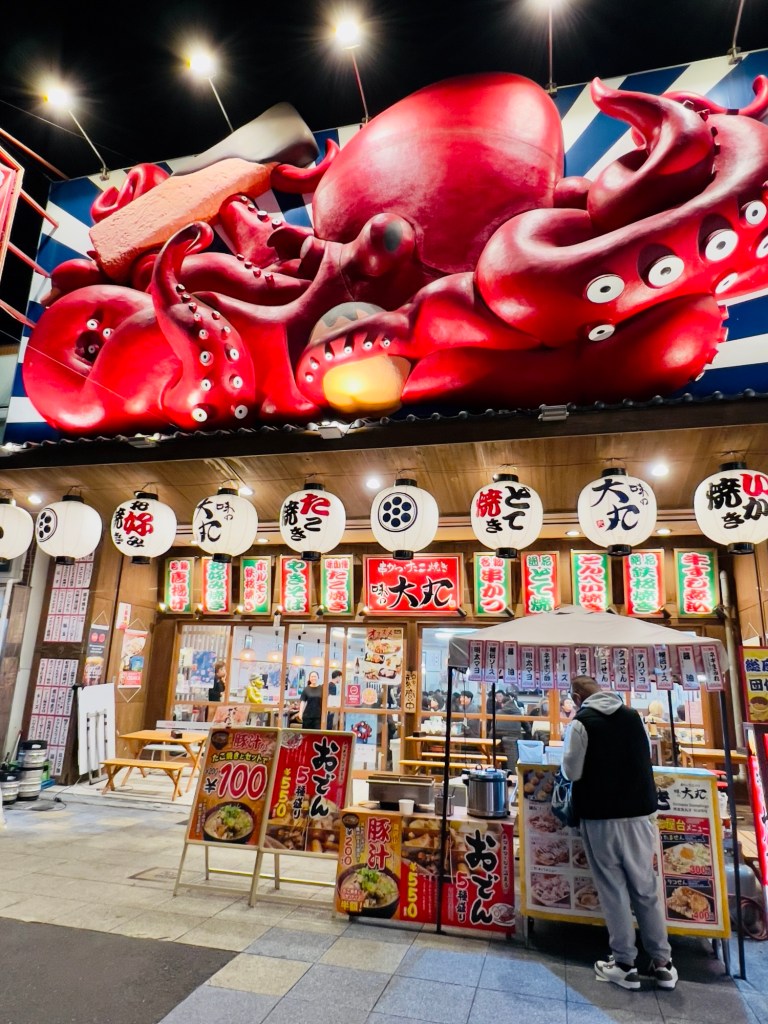
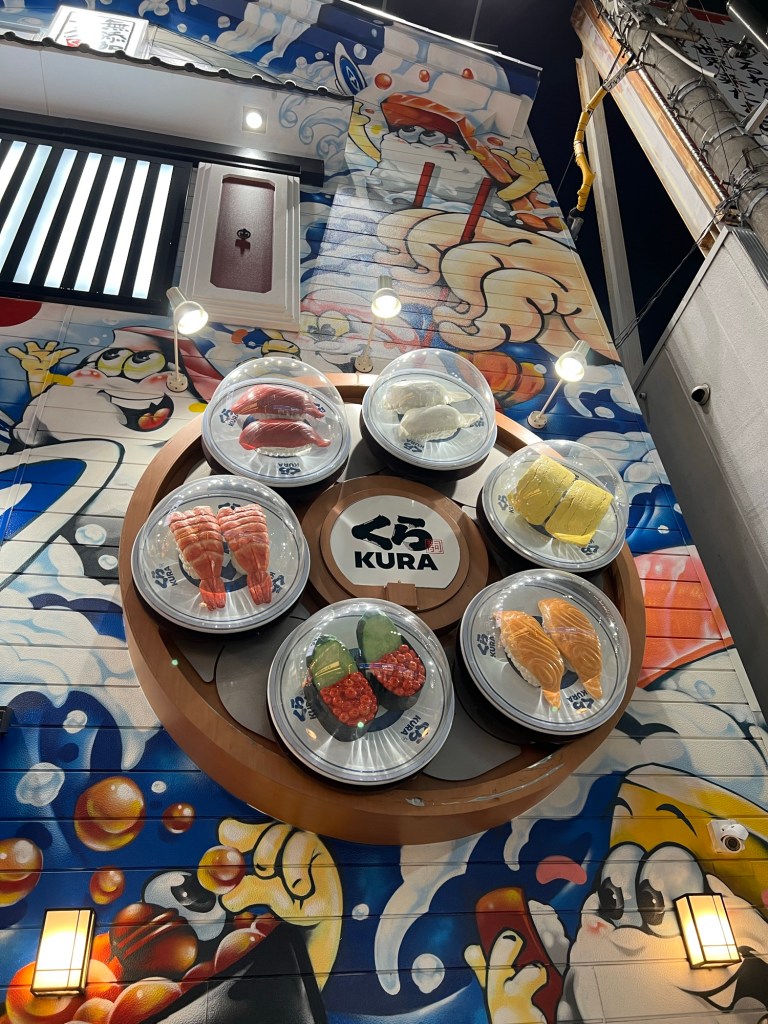
As I walked, I noticed the revolving sushi outside Kura Sushi; it was such an impressive sight, and it made me smile. There’s something so fascinating about seeing food moving like that, and in a place so full of life, it felt like a small slice of Osaka’s vibrant soul.
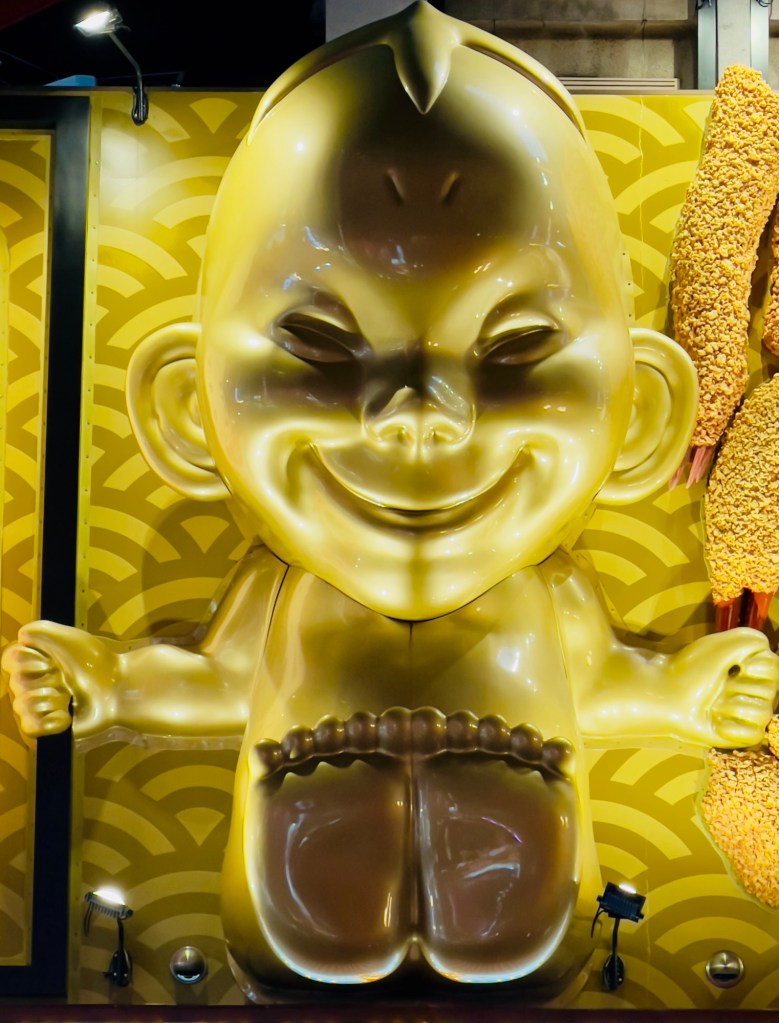
Then, something caught my eye: a peculiar but undeniably charming golden statue . I had no idea who he was, but he was there, quietly watching over the street. Intrigued, I looked it up and learned that the statue is of Billiken, a figure deeply rooted in Osaka’s culture and history. His Buddha-like smile, pointed ears, and elongated head made him appear quirky yet endearing. More than just a funny statue, he’s a symbol of good fortune, embodying the city’s spirit of welcoming warmth and happiness. I couldn’t help but think how his joyful smile seemed to echo the happiness I saw in the faces of the people around me, those who had come to enjoy the simple pleasures that Osaka offers so generously.
As I stood there, taking it all in, I realized something: I had found more than just a destination. Osaka is not only a fun place to visit, but it’s also a place that invites you to taste the very essence of Japan. Known as “Japan’s Kitchen” or Tenka no Daidokoro (天下の台所), it’s a city where the food doesn’t just fill your stomach, it tells a story. This rich culinary culture and history are what make Osaka feel like home to so many. And on that night, wandering through the colorful streets, I couldn’t help but feel a deep connection to this place, to its history, and to the warmth that its food and people share so freely.

As I made my way back through the glowing streets of Shinsekai, I couldn’t help but think: Osaka truly has a way of making you feel at home, no matter where you’re from. From the laughter in the air to the unforgettable food. The charm of the city is something that lingers with you long after you leave. So, if you’re looking for an adventure that’s as full of flavor as it is of heart, Shinsekai is waiting—just make sure to bring your appetite and a smile, like Billiken would!
 Netty's Moonlit Stories